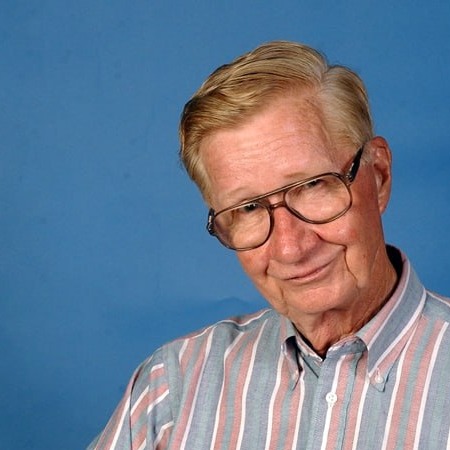
A speech by Bob Hamm
See if that’s your Uncle Elvie in that coffin.
My topic is Acadian history and Cajun humor. I want to talk a little about the former and maybe share a little of the latter with you.
Grew up in North Louisiana. Knew nothing about Cajuns. At that time very few people anywhere did.
When I left LSU I went to program a little radio station in White Castle. (Plaquemine Bill Lee) Mr. Doiron’s cane field
Himel’s took me in.
Bajon brothers looked after me.
The late Ben Kaplan of the Sociology Dept at USL often said that people are a product of their geography…that while they are exerting influence on it, it is exerting influence on them. I came south from a land of hard red hills and pine trees and landed in this Iberville Parish are of swamps and bayous and oak trees, and it was a different world. It produces a different breed of people.
I found a people who were very volatile. Way up in North Louisiana my people were so non-demonstrative that their lips didn’t move when they talked. These people I met in Iberville Parish were animated, prolific, witty. Religion wasn’t something that happened on Sunday, but was an integral part of their lives. Their homes were full of religious images—crucifixes, holy pictures, statuary. They began everything, from the shrimp season to the cane planting by invoking God’s blessing. Then they’d go play bourree in the church yard.
I was raised protestant, and the Cajuns were overwhelmingly Catholic, but it was their own brand of Catholicism. During their days of isolation, they were served by missionary priests that they saw only a few times a year, so they sort of adapted the Catholic religion to their own way of life.
Catholic or protestant, we all sin, whether we’re from White Castle, New Orleans or Shreveport. But I learned pretty quickly that in White Castle they enjoy it more.
And they celebrated every occasion elaborately. If there was no occasion they would create one.
And the food. The best food in the civilized world and parts of east Texas.
Cajuns figure North Louisiana people get as good food as they deserve. They gonna put catsup all over it any way.
The language was to me a third english, half french, and a third, to me, a sort of a melodic babel and it all blended into a linguistic jambalaya that I fell in love with. By the time I was there a week I was had quit talking like Bobby Richard from Winnfield Louisiana and had was saying mais yeah, and cher little heart and poo-yi and comment c’est dit, boug.
Here’s another difference I found between a Cajun a redneck. A redneck walks down the streets of Shreveport like he owns the town. A Cajun walks down the streets of Lafayette like he don’t give a damn who owns that town.
All this fascinated me, and I wanted to learn more about these people. I couldn’t learn it from them. If any of the Hymels or Bajons or the rest knew the story of their origins and arrival in Louisiana, they didn’t find it interesting enough to talk about.
I wanted to know, and I realized pretty quickly that I would have to research it myself, because there was no oral tradition among the Cajuns as far as their early heritage was concerned.
I’ve been doing it ever since, and it never fails to fascinate me.
First North American colonists.
First permanent colony 1604, three years before Jamestown. Hardy people from Brittany, Normandy and Picardy.
DESCRIBE THE AREA AND THE PEOPLE. DO CAJUN PRAYER
History records that when the British took over, they couldn’t govern the Acadians. Fact is, before Queen Anne’s War when the empire seized Acadie, the French couldn’t govern them either.
Early British rule was ambivalent. After the Treaty of Utrect, Queen Anne countermanded her officials in the colonies and gave the Cajuns freedom of religion.
This was a source of irritation to the British trying to govern these people, and after Queen Anne’s death they were given the opportunity to be more harsh with them. General PHIllips. Ordered them swear allegiance of leave.
Needed their fish, cattle, corn and wheat for his troops.
Worse still, he was afraid of the heavy concentration of French in Canada, and he knew if these 18,000 Acadians left, that’s where they would go.
So he backed down and accepted a restricted oath that exempted them from bearing arms against the enemies of the crown. The Cajuns simply weren’t going to fight other Frenchmen, or their friends the Indians.
Then, after the French and Indian War in 1747, things got worse again. A governor named Lawrence came to rule the Cajuns. From everything I can learn, he was a black hearted white livered back biting sidewinder. Not the british…but General Lawrence.
He tried to bring the Cajuns to heel by force of arms. They were on their own turf, soldiers coming from England were as ineffective against them as the revenuers were against Cajun bootleggers in the Atchafalaya Basin. Force didn’t work. Indians were their allies. A priest named La Loutre, the otter, was an instigator.
Lawrence used trickery. He had them assembled under false pretenses, surrounded them with soldiers and announced that their lands, cattle, all their belongings other than what they could carry away with them were forfeited to the crown and they were to be removed from the province.
The men were put under arrest. As the Acadians were driven from their farms, the buildings were burned to the ground.
The object was genocide. Hitler. Zaire.
Most people, including the Acadians themselves, know of the hardships that ensued. Cargo boats. Packed in like cattle. Ill equipped to survive a brutal winter at sea. Some arrived in New York where an account describes them as “poor, naked and destitute.”
In Pennsylvania, three ships were not allowed to dock, they were prisoners aboard the ship. Over half of them died of small pox.
IN Massachusettes, New York and Pensylvania, our freedom loving forefathers who had fought the British for this nation’s independence forced all Acadians under 21 into indentured service on the Labor-hungry yankee farms.
The governor of Virginia would not accept them, and many more died aboard ship.
Only one in ten refugees sent to the Carolinas survived.
In Georgia, they didn’t even use the euphemism of “indentured servants.” They simply sold them as slaves.
Yet somehow, many survived, and abided and endured. They had heard of a place called Louisiana which was populated by the French and where they might find their brothers. With more incredible hardship, those who could made it to the New Orleans area, and found that the Creole French nobility wanted nothing to do with these country farmers and New Orleans was ugly and inhospitable.
It took a Spaniard, Gov. O’reilly, to finally open the doors of opportunity to them. Settlers were needed in the harsh swamps and coastal marshes so Gov. O’Reilly gave them landgrants. (O-ral-lee) They arrived in Southwest Louisiana after a brutal, horrible, terrifying experience and it was like they looked around and said, “okay, I’m through with that.’
And they were. They didn’t pass along any animosity toward the British to their children. They didn’t keep alive the ugly memories. They went on with their lives. It’s remarkable. My grandfather was Irish, and he kept the anger toward the British that was passed down to him by his forebears until he died. THE REASON THE SUN NEVER SETS ON THE BRITISH EMPIRE.
WHAT IS A CAJUN? What is a Cajun
Between the red hills of North Louisiana and the blue waters of the Gulf of Mexico, lives the Cajun. Among the marshes and the bayous, the tall oaks and whispering moss, he carries on the traditions of his hardy Nova Scotian ancestors -- les Acadiens, whose flight from persecution brought them to the Lush South Louisiana soil over two centuries ago. In other parts of the world, little girls are made of sugar and spice and everything nice, while little boys are made of snips and snails and puppy dog tails. Little Cajun children , or, Acadian, if you will - are made of ~
GUMBO, boudin and sauce piquante . . . crawfish Stew and Oreilles de Cochon.
A Cajun child is given bayous to fish in, marshes to trap in, room to grow in and churches to worship in. A Cajun likes fiddles and accordions in his music, plenty of pepper in his courtbouillon, shrimp in his nets, speed in his horses, neighborliness in his neighbors and love in his home.
A Cajun dislikes: people who don’t laugh enough, fish enough, or enjoy enough
of all the good things God has given to the Cajun. He doesn’t like to be hurried when he’s resting or distracted when he’s working. He doesn’t like to see people unhappy, and he’ll do all he can or give all he has to bring a smile to a face stricken with sadness. A Cajun likes to dance and laugh and sing when his week of hard work has ended. And just as Saturday night at the fais-do-do replenishes his store of energy and his personal balance so he can meet the next week’s chores with vigor, Sunday at Church refreshes his spiritual and moral values and keeps strong his always-sustaining faith. A link with a proud past, a Cajun is a man of tolerance who will let the world go its way if the world will let him go his. He is a man of friendliness who will give you the crawfish off his table, the Sac-au-Lait off his hook or the shirt off his back. But if you cross a Cajun, he’ll give you the back of his hand or the toe of his boot. if he likes you, he’ll give you his whole wide, wonderful world. If he doesn’t, he’ll give you a wide berth. A Cajun is a complex person, with as many ingredients in his makeup as there are in the gumbo Mama makes for special company. He has tolerance for those who earn it Charity for those who need it . . a smile for those who will return it . . . and love for all who will share it. BUT . a Cajun can be as stubborn as a mule and as ornery as an alligator. IF he sets his head on something. he’ll fight a circle saw before he’ll yield to your opinions. You’d as well argue with a fence post as try to change the mind of a Cajun. And, as fun-loving as he is, a Cajun can work as long and hard as any man. He carved out “Acadiana” by hand, from the swamps and marshes and uncultivated prairies. But when the work is done and the argument ended, a Cajun can sweep you right into a wonderful world of joie de vivre with an accordian chorus of “Jolie Blonde,” and a handful of happy little words - - - five little words to be exact: “Laissez les bon temps rouller!” Let the good times roll!
HUMOR First association writing for Bud Fletcher (Cyprienne Robespierre). FAVORITE CYPRIENNE STORY.
CAPITAL 456-632
BUD PASSED AWAY. JUSTIN, THE KING OF CAJUN HUMOR SO SUCCESSFUL TOO EXPENSIVE FOR MANY.
DID WELL, BUT PEOPLE AUDIENCES WERE SURPRISED THEIR CAJUN HUMORIST TURNED OUT TO BE A REDNECK FELLOW FROM WINFIELD. I WROTE A LITTLE POEM EXPLANING HOW I BECAME A RED NECK CAJUN.
NONC ROBERT—EDITOR OF THE PASSE PAS RIEN GAZETTE.
SLOGAN: EVERYONE IN PASSE PAS RIEN KNOWS WHAT EVERYONE ELSE IS DOING. JUST READ TO SEE IF GOT CAUGHT.
PAGE ONE:
BIG FLOOD. WRITE THE PRESIDENT. WRITE THE PRESIDENT.
DURING FLOOD, MRS. PIERRE POUSSAN ON TOP OF HOUSE. LITTLE BLACK HAT.
MRS. ALPHONSE BOUDREAUX CELEBRATED 102ND BIRTH DAY. IN A BUGGIE.
POLICE REPORT
JOIE BENOIT STEALING LUMBER
MRS. DUT TRAHAN ATTACKED
MRS. TRAHAN AND INDECENT EXPOSURE NEXT DOOR.
ELECTRIC CHAIR. TEE-TAN BROUSSARD.
CHURCH PAGE Mrs. Honoree Doiron went to a protestant church. (come yourself)
SPORTS PAGE
EROLESE BERNARD QUIT THE USL FOOTBALL TEAM.
SCHOOL PAGE
TEEN TAN EXPELLED FROM THIRD GRADE
OBITUARY PAGE: CAPTAIN TEE TAN ARDOIN PASSED WAY. BURIED AT SEA.
ANOTHER DROWNING AT BUTTE LAROSE. ALPHONSE DAIGLE AND FRANCOIS GARNIER FISHING. ALPHONSE STUTTERED.