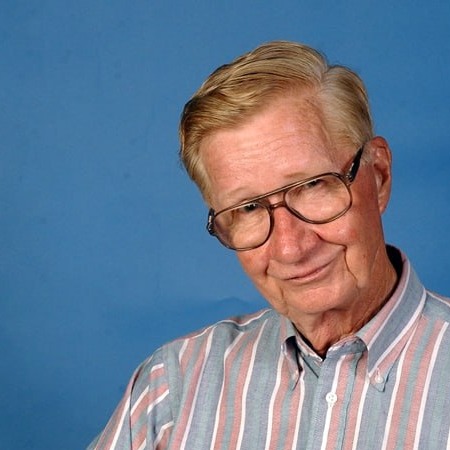
Bob Hamm wrote for other people's voices — speeches, roasts, introductions, comedy albums. He wrote eulogies that made funeral homes go quiet. He wrote stories that never got published because he was too busy writing for everybody else. These are the lines that reveal the man.
On Himself
"People ask me what I do for a living and I seldom give the same answer twice in succession."
— Letter to his niece
"I have faithfully played the role of black sheep of the family, but age has relieved me of that responsibility."
— Letter to his niece
"I tell you this so you'll know that my views on politics were tempered by environment. Earl Long patted me on the head when I was six and it was like being touched by God. When I was nine, my brother and I were stealing watermelons out of Mr. Earl's patch and his overseer fired a round of birdshot over our heads. That changed my religion."
— AARP speech
"My grandfather, George Kelly, was a strong influence on my attitude toward Louisiana politics. Other than Earl and Huey, I don't know that Papa ever voted for anyone. Elections for Papa were an opportunity to go to the polls and turn the rascals out."
— AARP speech
"When he was 80 years old and terribly crippled with arthritis, he walked the two miles into town to vote in his last election. I was there for his next birthday, and we talked politics as usual. I said, 'Papa, you've seen a lot of changes in your time.' He said, 'Yep, and I been against every damn one of 'em.'"
— AARP speech, on his grandfather George Kelly
On People He Loved
"I have only ordinary words... and Richard was an extraordinary man."
"Before he touched the minds of people, he touched their hearts."
"In the simplest everyday occurrences of life, Richard's love for life permitted him to see the poignance, the drama, the beauty and the rich humor that most of us rush past."
"Richard has simply shed an earthly body that no longer served him well and gone on a little ahead of us."
"In small cottages and little farm houses in the country... tears are falling today for Richard Bertrand."
"George called. He didn't have any sympathetic words, or any admonitions to 'cheer up, things could be worse' or any of the usual lame efforts to brighten a miserable life. He just said, in his big gruff voice, 'Come home. Come eat. I been missing you.'"
"He waived the bragging rights to stories most of us would have tracked people down to tell, and sat on 'em to make 'em listen."
"I use to say after each near brush with death, and he had a lot of them, that the Lord wasn't ready for him, and the devil didn't figure he could cope with him. Wednesday, the Lord decided he wanted him."
"On that long night, he not only let me see through the eyes of his memory, but he also let me touch his soul."
"You kept the faith, Sas — with God and country and family. You fought the good fight — for freedom and liberty and justice. You earned our love. You earned your rest."
"She was big as Rosie Grier, and in her best days might have taken him at arm wrestling, but inside she was dainty and sweet, and she cared about people."
On What He Saw
"He just showed up the first day, said, 'I works here,' and started sweeping out the store. Nobody argued with him."
"For the first time, I saw him as a ragged black kid on a too-small bicycle instead of a boon companion, confidante and co-conspirator against the world."
"I try to scream, 'It was the times, Jimmy. That's the way things were then.' But my voice doesn't work and Jimmy Lee keeps on riding, looking back over his shoulder at me with pain in his eyes."
"I think about Jimmy Lee now when I see southern white kids and black kids going to school together, and double-dating and partying together and eating together in restaurants. It came too late for us, Jimmy Lee."
"It was not the voice the public knew... not The Old Master Stump Speaker howling on the hustings. It was the real voice... the voice of a basically shy, deeply caring man. It was a voice very few of us were ever privileged to hear."
— "Medicine's Greatest Miracle" (Bob on Earl Long's private voice)
"Poor folks got to have medical care same as rich people. And their children got to have schooling and school books, and carry something in their lunch sacks besides a cold sweet potato."
— "Medicine's Greatest Miracle" (Earl Long)
"Them that's got more than they need are going to have to share a little of it with them that ain't never had nothing."
— "Medicine's Greatest Miracle" (Earl Long)
"He had survived the depression and prospered, despite a fierce Irish thirst for whiskey — a thirst he finally conquered by leaving the pressures of business for the peaceful life of a levee rat."
"He pursued the ladies with the vigor of a 20-year-old. If there was an end result to the happy pursuit, he was too much of a gentleman to talk about it — but he was hell when he was in pursuit."
— "The Senator" (on Dudley LeBlanc)
"We felt good and noble walking down Cypress Street as dawn came slipping into Lafayette. We had a mission. We were the support team."
On the History He Carried
"He had a year to wonder if it would all happen to him again."
— "Willie Francis" (on surviving the electric chair)
"If I die tonight, I'll die well fed."
— "Willie Francis" (Andrew Thomas's last words, hours before his murder)
"Crime writers make stories from their own heads, Anthony, and claim they were told to them by people unable to make denial."
— "Jimmy the Robin" (on the Huey Long assassination)
"In the name of your papa, don't write garbage."
— "Jimmy the Robin"
"His love for you was very great. You and your Mama and your sister, Rosa, were his life. To say otherwise is disrespectful to his honor as a family man."
— "Jimmy the Robin"
"Perhaps he was only a voice crying in the wilderness. I don't think so."
"Perhaps Richard's politics — politics of listening and caring and trying to better the lives of the people he served — was politics at its finest hour."
On What Matters
"When a Cajun sits down to a crawfish gumbo, with loved ones about him and songs and laughter in the air, he is in the Great Society."
— Liner notes, Through the Eyes of a Cajun (La Louisianne LL-120)
"A Cajun is a man of tolerance who will let the world go its way if the world will let him go his."
"A Cajun dislikes: people who don't laugh enough, fish enough, or enjoy enough of all the good things God has given to the Cajun Country."
"He'll give you the crawfish off his table, the sac-au-lait off his hook or the shirt off his back. But if you cross a Cajun, he'll give you the back of his hand or the toe of his boot."
"Out of that experience came the realization that caring is raised to its highest level of accomplishment when good people join together in a structured environment with clearly defined missions and goals."
— Remarks Before Passing the Gavel (United Way speech)
"And when your time is over
And your place on earth is gone,
May you waltz right into heaven
To the tune of 'Jolie Blonde.'"
"They lived happy ever after, ever once in a while."
Know Something He Said?
These words come from 877 files on floppy disks and in file cabinets. But Bob said things in person that never got written down. If you remember something Bob said — at a roast, over gumbo, on the air — we want to hear it.